Heavy-Duty Wheel Block Systems in Modern Smart Stadiums
In traditional industrial perception, Wheel Block Systems are primarily associated with factory overhead cranes and port bridge cranes. However, with the rise of the Smart Stadium concept, these heavy-duty industrial components are crossing boundaries to drive a revolution in turf maintenance.
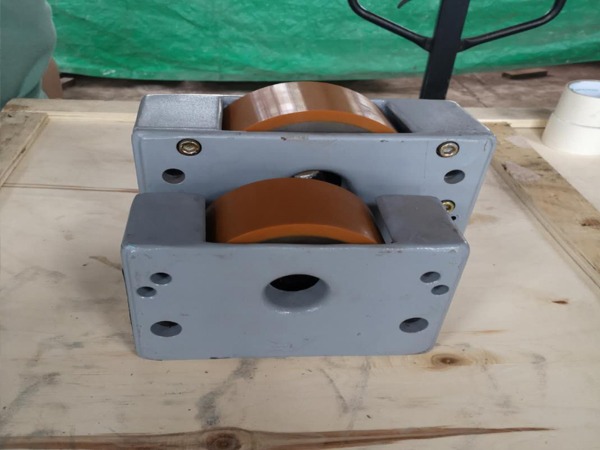
I. Core Requirements
To optimize spectator experience, modern top-tier football stadiums often feature high-coverage roof designs. This results in natural grass being deprived of uniform sunlight. Consequently, FIFA-standard venues have introduced mobile full-spectrum LED lighting systems.
Physical Scale: These are massive steel gantry structures with spans of up to 80 meters and total weights reaching approximately 190 tons.
Movement Precision: The system must achieve millimeter-level smoothness on tracks to ensure uniform light intensity distribution across thousands of square meters of turf.
Logical Pain Points: With such massive loads, ordinary mobile devices are prone to skewing, instability, or damaging the expensive foundation of the natural turf.
II. Technical Logic: Why Wheel Block Systems are the Optimal Solution?
When dealing with "ultra-large spans and ultra-heavy loads," industrial-grade wheel blocks demonstrate three irreplaceable logical advantages:
1. Load Distribution Logic
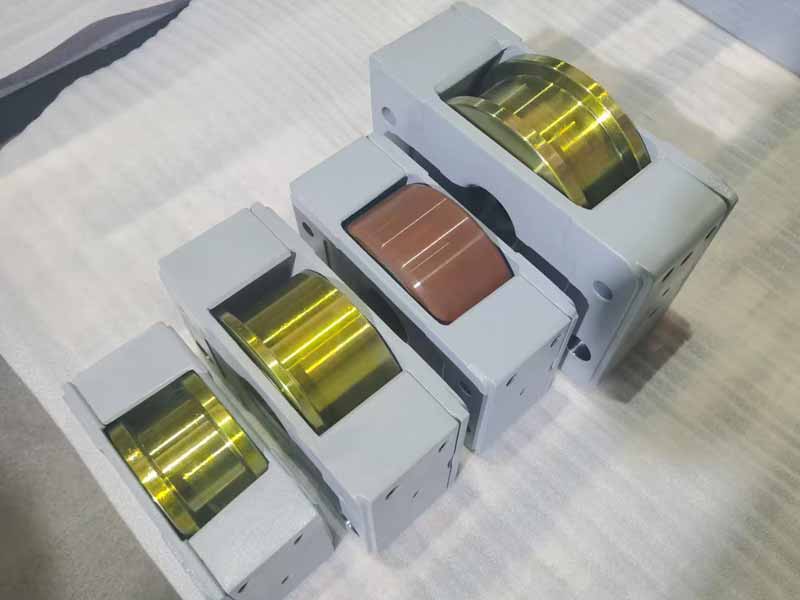
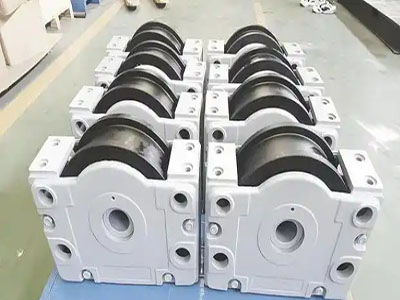
To handle the 190-ton deadweight, the wheel block utilizes a high-strength housing (typically nodular cast iron or welded structures) to distribute vertical pressure evenly onto the rails.
Technical Metric: The load capacity of a single wheel block can exceed 46 tons. This design effectively prevents metal fatigue under long-term static pressure.
2. Synchronized Drive Logic
In wide-span structures, crabbing or snaking motion is a critical failure risk. Wheel blocks integrate geared motors with Variable Frequency Drive (VFD) systems to achieve a closed-loop logic:
Differential Compensation: Real-time correction of speed differences between the left and right rails.
Anti-Jamming Design: Ensures absolute synchronization across the dozens-of-meters-wide structure, preventing track biting forces from damaging the turf’s structural base.
3. Environmental Durability Logic
Stadium environments are not controlled laboratories; they involve high humidity from irrigation, outdoor precipitation, and chemical erosion from fertilizers.
Protection Scheme: Professional wheel blocks are equipped with track sweepers and multi-layer C4/C5 grade anti-corrosion coatings, ensuring low frictional resistance even in harsh conditions.
III. Modular Solutions: From Component to System
Short construction cycles and high maintenance costs of modern stadiums require wheel blocks to have high levels of integration:
Feature | Description | Value |
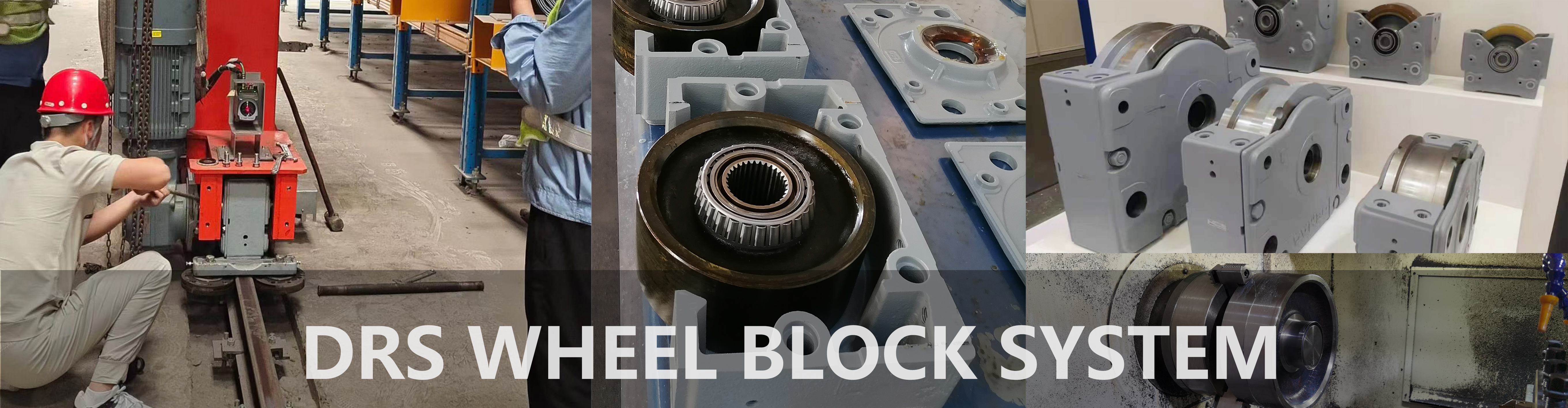
Modular Design | Plug-and-play connection of drive wheels, idler wheels, and gearmotors. | Shortens assembly time and reduces maintenance difficulty. |
Customized Buffering | Equipped with high-performance polyurethane or hydraulic buffers. | Absorbs kinetic energy and protects the steel structure from mechanical impact. |
Smart Monitoring | Integration of load sensors and condition monitoring. | Enables predictive maintenance to avoid downtime during major matches. |
IV. Conclusion
For stadium developers, selecting a complete wheel block drive system is more than just choosing a component—it is choosing a highly reliable mobile chassis solution for the long-term operation of the entire venue. Looking to upgrade your stadium’s infrastructure? Don’t let mechanical limitations hinder your turf's growth. Our engineering team specializes in heavy-duty mobility solutions tailored for the sports industry. [Get A Technical Consultation]